PR delivery metrics
Why it matters
Pull request metrics are the most direct signal of how efficiently work moves through your development pipeline. High PR throughput with low cycle time indicates a healthy delivery process. Stale PRs and poor standards compliance signal bottlenecks that compound over time slowing delivery, frustrating developers, and hiding risks.
What to track
- PR throughput: Number of pull requests opened and merged per team or service over time.
- Cycle time: Time from PR creation to merge, broken down by coding, review, and merge phases.
- Stale PRs: Pull requests open longer than your team's agreed threshold, indicating review bottlenecks or abandoned work.
- PR standards compliance: Whether PRs meet your team's conventions: description quality, labels, linked issues, reviewer assignment.
How Port helps
Port ingests PR data from GitHub, GitLab, and Azure DevOps and links every PR to the service, team, and owner in your software catalog & context lake. Instead of aggregate numbers, you see throughput and cycle time per service and team making it easy to spot which teams are healthy and which are falling behind. Delivery Performance scorecards grade entities on these metrics using Bronze, Silver, and Gold tiers.
Example scenario
An engineering director reviews the Delivery Performance dashboard and notices that one team's PR cycle time has increased from 1 day to 4 days over the past month. Drilling in, they see that stale PRs have tripled and most are waiting on a single reviewer who's been pulled onto an incident response rotation. They redistribute review assignments and set up automated Slack alerts for PRs approaching the 48-hour SLA. Cycle time drops back to 1.5 days within two weeks.
Example dashboard
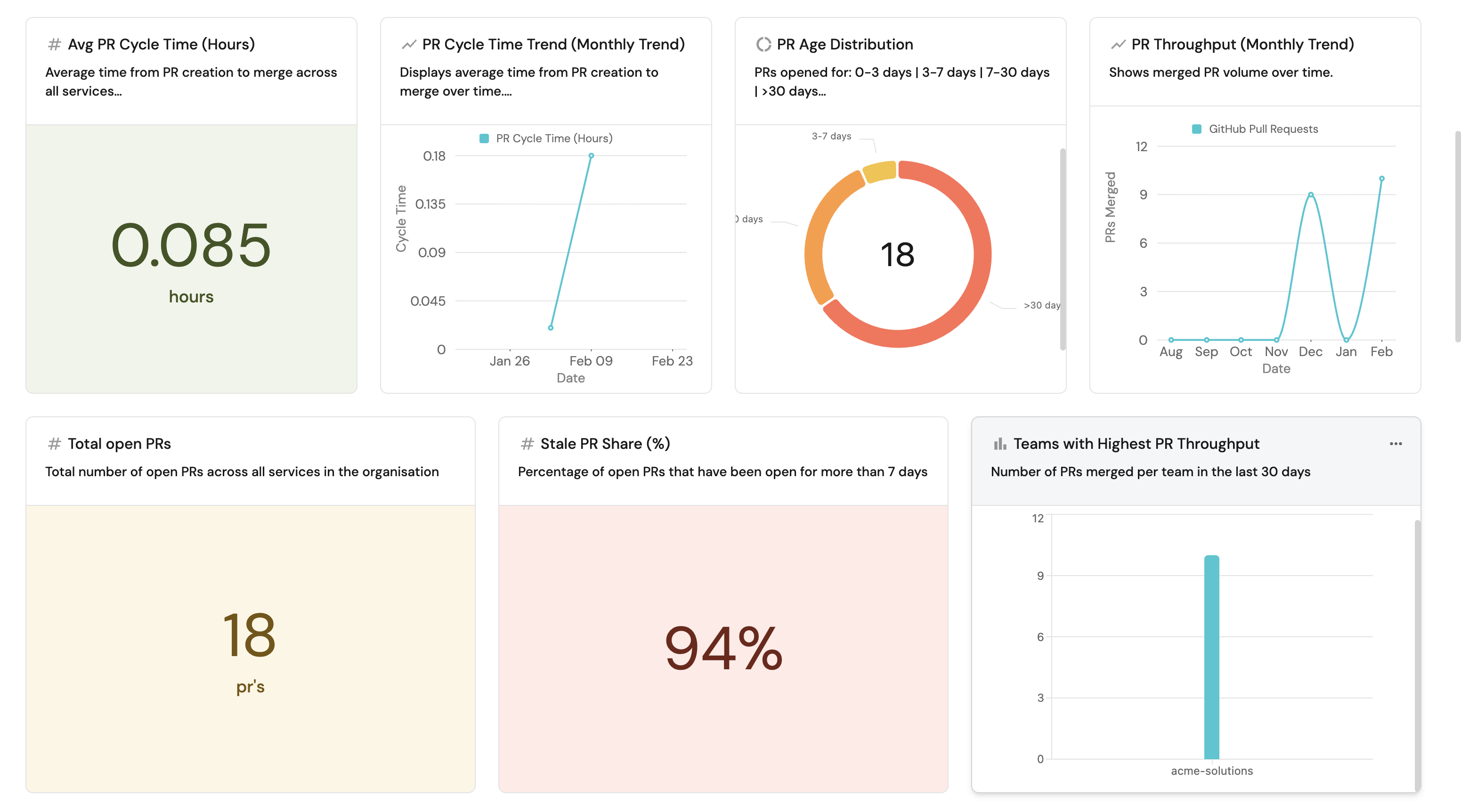
Example PR delivery metrics dashboard based on PR delivery metrics guide.
Follow the recommended guides below to implement this use case.